Feb
26,
2026
Lorem Ipsum is simply dummy text of the printing and typesetting industry. Lorem Ipsum has been the industrys standard dummy text ever since the ...


228 Bush Road, Rosedale | Mon–Sat 9:30–4:30
Feb
26,
2026
Lorem Ipsum is simply dummy text of the printing and typesetting industry. Lorem Ipsum has been the industrys standard dummy text ever since the ...
Feb
26,
2026
Lorem Ipsum is simply dummy text of the printing and typesetting industry. Lorem Ipsum has been the industrys standard dummy text ever since the ...
Feb
26,
2026
Lorem Ipsum is simply dummy text of the printing and typesetting industry. Lorem Ipsum has been the industrys standard dummy text ever since the ...
Feb
26,
2026
Lorem Ipsum is simply dummy text of the printing and typesetting industry. Lorem Ipsum has been the industrys standard dummy text ever since the ...

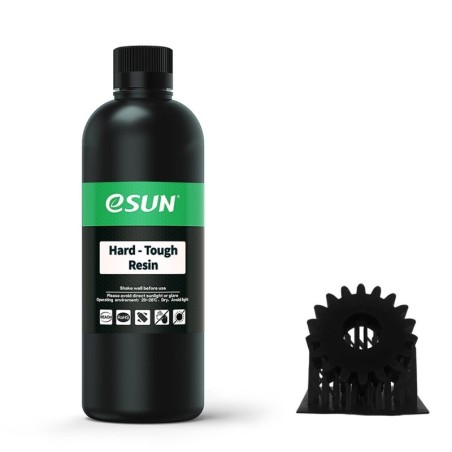
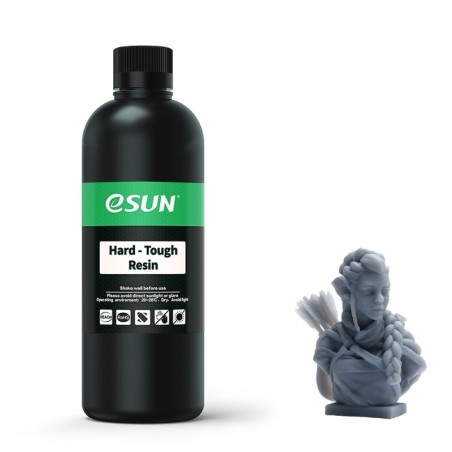
Tough Resin simulates the feel and many of the important mechanical properties of Acrylonitrile Butadiene Styrene (ABS) plastic.
ABS is a very common thermoplastic that provides a good balance of strength and flexibility.
Tough Resin creates strong engineering prototypes and has been developed to withstand high stress and strain. Consider using this material for “works-like” prototypes and assemblies, including designs with snap fit joints and living hinges.
Toughness refers to a material’s ability to absorb energy before fracturing. When a tough material yields, it will undergo some deformation rather than just shattering. In other words, tough materials have a little more “give” than brittle ones.
Toughness is also defined as the area under a stress-strain curve. Tough materials generally have a good balance of strength (the amount of stress a material can withstand) and ductility (the elongation or percentage strain).
Because of this, the area under a tough material's stress-strain curve is much larger than that of a very strong material with low elongation.
Toughness directly correlates to the amount of energy each material can absorb before failure.
RECOMMENDED FOR:
High-stress components
Snap-fit functions and living hinges
Machining
Cyclic loading
Works-like/feels like ABS prototyping
Geometrically accurate prototyping under load
NOT RECOMMENDED FOR:
Very fine features or thin walls
Rigid or stiff prints
High-temperature applications
Constant loading
9 products
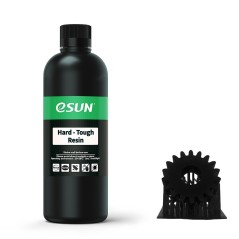
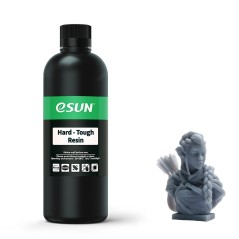
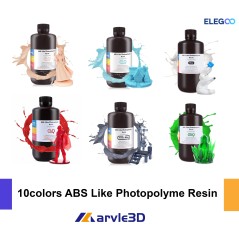

![[Bundles] 8/10 Bottles ELEGOO ABS-LIKE LCD UV-CURING PHOTOPOLYMER RAPID RESIN](https://dev.marvle3d.co.nz/6021-home_default/-bundles-810-bottles-elegoo-abs-like-lcd-uv-curing-photopolymer-rapid-resin.jpg)
![[Bundles] 8/10 Bottles ELEGOO ABS-LIKE LCD UV-CURING PHOTOPOLYMER RAPID RESIN](https://dev.marvle3d.co.nz/5892-home_default/-bundles-810-bottles-elegoo-abs-like-lcd-uv-curing-photopolymer-rapid-resin.jpg)

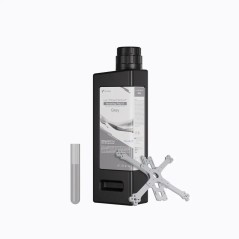
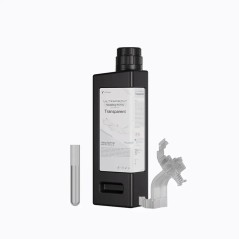
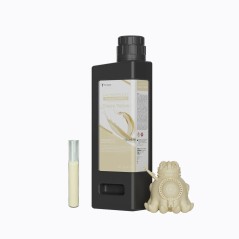
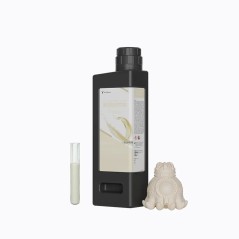
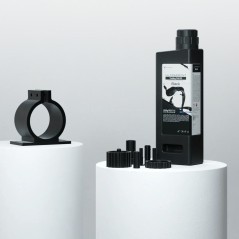
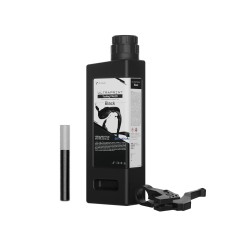



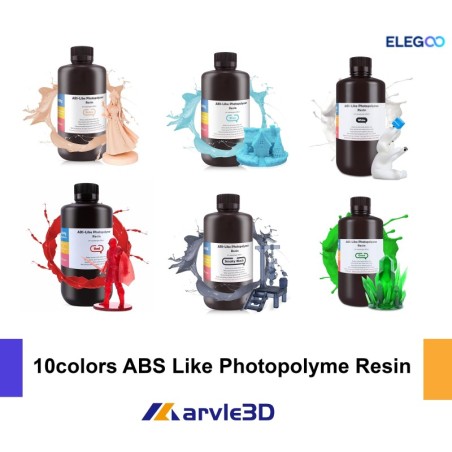

![[Bundles] 8/10 Bottles ELEGOO ABS-LIKE LCD UV-CURING PHOTOPOLYMER RAPID RESIN](https://dev.marvle3d.co.nz/6021-medium_default/-bundles-810-bottles-elegoo-abs-like-lcd-uv-curing-photopolymer-rapid-resin.jpg)
![[Bundles] 8/10 Bottles ELEGOO ABS-LIKE LCD UV-CURING PHOTOPOLYMER RAPID RESIN](https://dev.marvle3d.co.nz/5892-medium_default/-bundles-810-bottles-elegoo-abs-like-lcd-uv-curing-photopolymer-rapid-resin.jpg)